Last Updated: June 2026 | By Whitney, Brows by Whitney
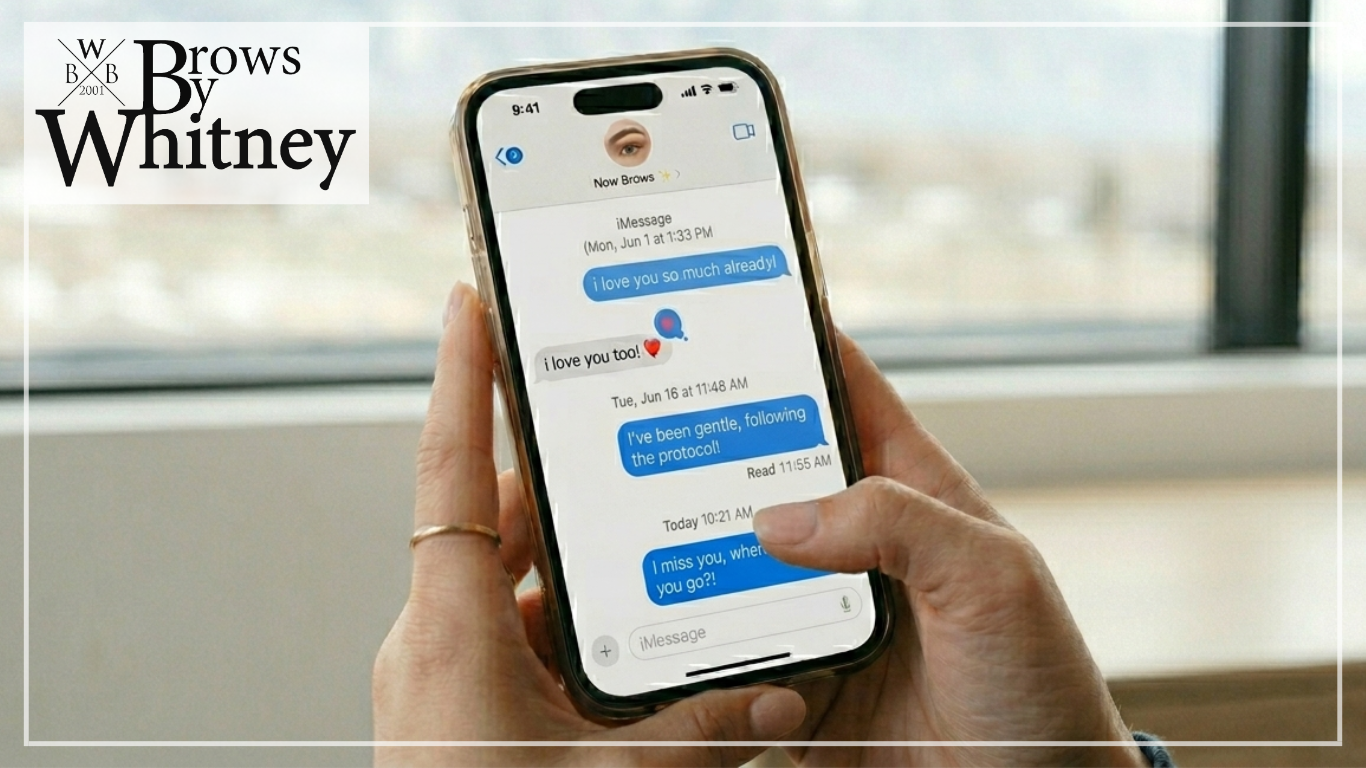
Over the ten years I’ve been microblading here in the Salt Lake Valley, I’ve seen different aftercare methods come and go. In the beginning, "dry healing"—meaning you couldn’t let a single drop of water touch your face for two weeks—used to be the go-to approach. But clients hated it because not being able to wash your face is gross, and upon further digging, it failed to keep the body’s natural healing process in check for the sake of optimal healed microblading & nanoblading results.
I knew there had to be a better way, so I did the research and switched to a gentle washing routine instead. That was NINE years ago, so trust me, I have this aftercare thing DIALED IN! My aftercare routine keeps the pigment locked in, minimizes the healing drama, and gives you the most color-rich and defined healed microblading strokes possible.
If you've ever wondered why I have you wash your brows, or why your strokes seem to nearly disappear during week two, here is exactly what is happening.
1. The Cleanse: The First Step in Microblading Aftercare (Days 1–7)
The old rule was to keep your brows bone-dry. But fresh microblading and nanoblading strokes are technically precise little wounds throughout the eyebrow areas.
Early in the microblading healing process, your skin naturally oozes lymph fluid. If you let that fluid sit there, it dries into thick, heavy scabs. When those scabs flake off, they act like a sponge and pull your new color right out with them.
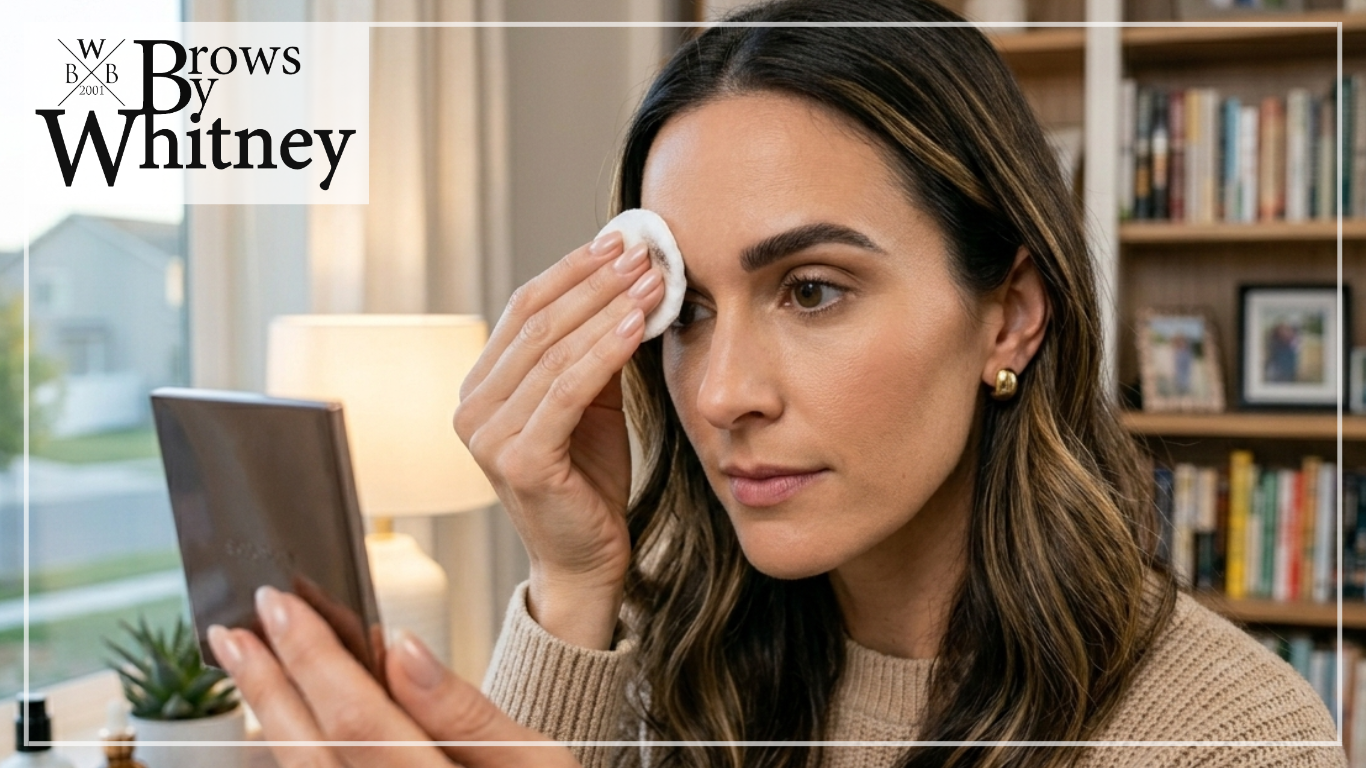
That’s why I have you lightly dab your brows with distilled water on Day 1, and then gently wash them twice a day with Cetaphil for the first week. We aren't scrubbing; we are just wiping away that fluid before it can turn into a pigment-stealing scab. Follow that up with a tiny, half-grain-of-rice drop of ointment on dry skin, and your brows heal optimally.
2. The "Ghosting Stage" in Microblading Healing (Weeks 2–3)
The biggest hurdle happens during week two. Your light flaking peels off, you look in the mirror, and you panic because it looks like your brows completely vanished or look super patchy.
I call this the Ghosting Stage, and it’s completely normal.

Your body heals from the inside out. When that top layer of skin flakes away, a new, thick protective layer forms right over the pigment—kind of like looking at your strokes through a foggy bathroom mirror. Around weeks 3 and 4, that skin settles down, the color comes back, and your strokes reappear exactly how we wanted them. Trusting the process here keeps you out of a Google search panic loop.
3. The Real Threat: Your Vanity
Once your 6-week touch-up is done and you’ve fully healed from that, your brows are locked in. But from then on your daily skincare routine takes over as the real threat.

If you use great anti-aging products, they are designed to speed up your skin's cell turnover. That's awesome for your glow, but brutal on brow pigment. Over time, those active ingredients travel through the skin, causing your crisp strokes to blur or change color prematurely.
Protect Your Investment
You don't have to choose between great skin and great brows. I put together a quick 60-Second Skincare Audit breaking down the ingredients to avoid, plus a quick explanation of the "Halo Technique"—a simple trick for applying your night serums while leaving a safe zone around your brows.
Keeping Your Color Sharp
This skincare application method is designed to get the absolute most life out of your brows. Your skin naturally replaces itself, so over 12 to 18 months, your strokes will gracefully soften. Don't wait until they are totally gone before booking a touch-up to regain the high definition in your brows.
Keep an eye on them, protect your investment, and let's keep your color truer, longer.
If you are a client and you are ready to book your yearly touch up, check your email inbox for a reminder email from Brows by Whitney. The email has your touch up appointment booking link. Or click the button above so I can send it to you.